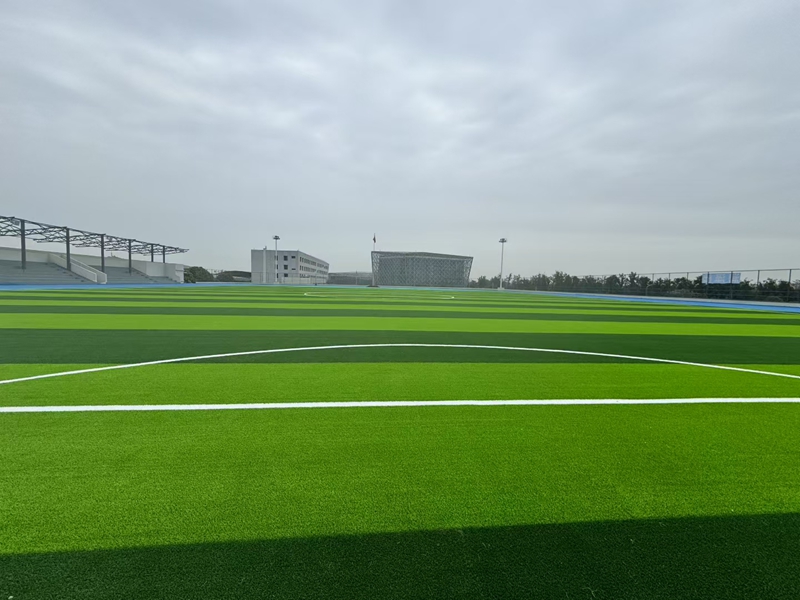
Football field artificial turf is divided into non filled and filled types based on whether filling materials are needed or not after the turf is laid
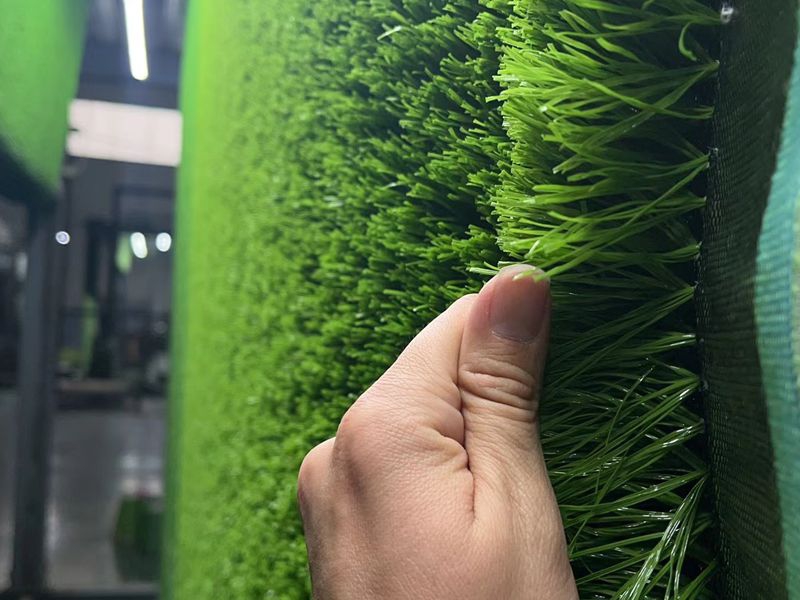
Fill type artificial turf
After the lawn is laid, fill the lawn with quartz sand and rubber particles (or other similar elastic particles).
The purpose of sand filling is to increase the stability and elasticity of the bottom of the lawn, protect the roots of the lawn, reduce the wear and tear caused by high-intensity and high-frequency sports on the lawn, extend the service life of artificial turf football fields, simulate the elasticity of natural lawns, and increase a good sports experience.
Quartz sand can stabilize grass fibers, maintain the upright and beautiful appearance of the lawn; Rubber particles provide softness and cushioning, reducing the risk of injury for athletes.
The filling of football fields and lawns needs to be flat and even. Sand filled lawns require
regular maintenance to maintain the uniform distribution of filling materials and the smoothness of the lawn.
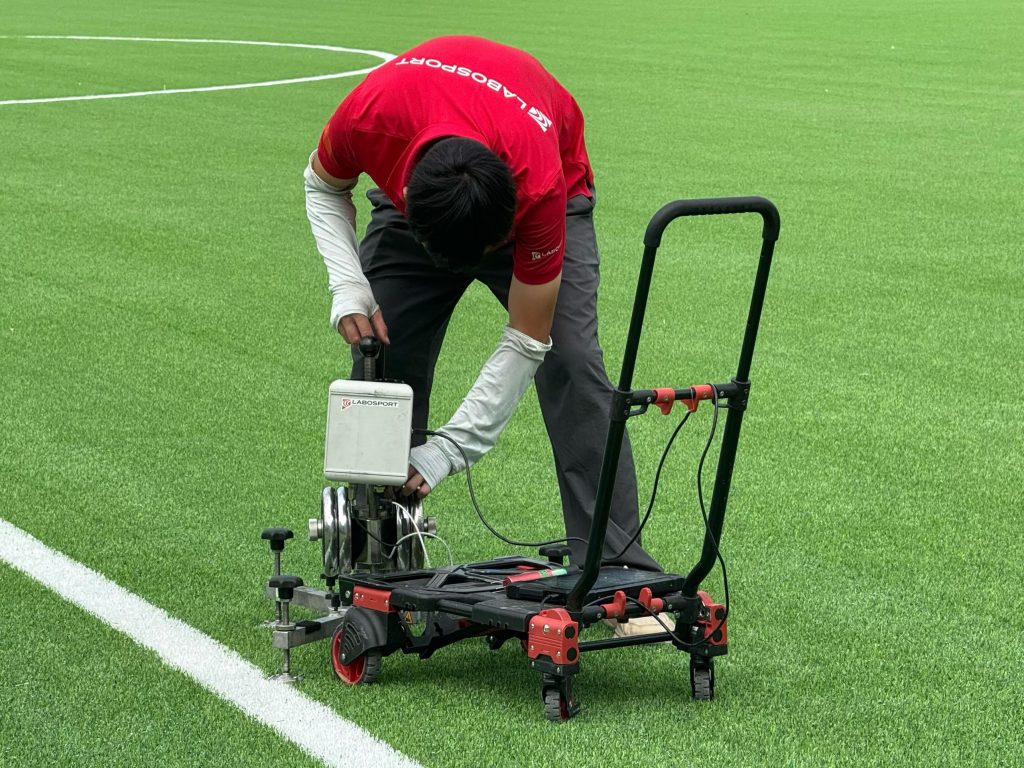
Non filling artificial turf
Non filling artificial turf does not require filling with quartz sand or rubber particles, and the grass fibers are made of higher weight materials to provide the required stability and elasticity. This type of lawn is easier to install and maintain because there are no issues of displacement or loss of filling materials.
Non filled lawns are visually cleaner and have relatively lower maintenance costs, making them suitable for venues with low maintenance requirements.
Due to the absence of sand filling, this type of lawn has a softer surface, but may differ in athletic performance from traditional sand filled lawns