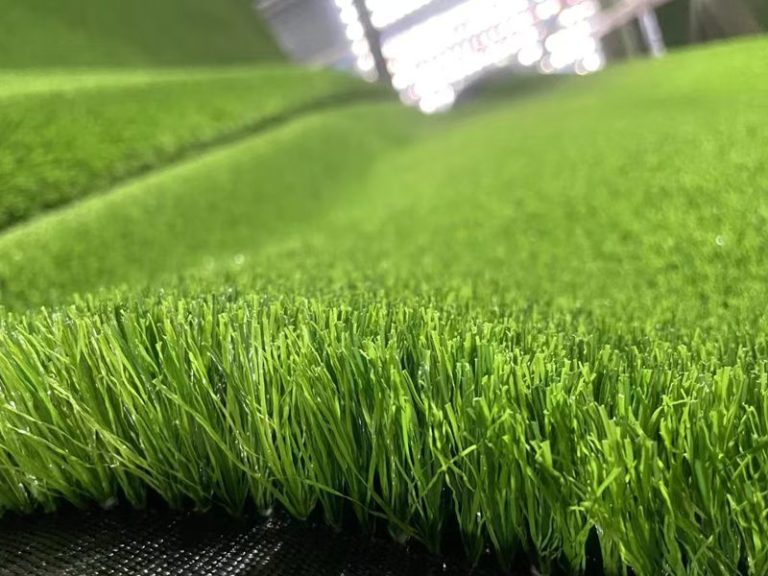
Professional/standard football fields strongly recommend using cushioning pads; For regular training, school playgrounds are generally not used.
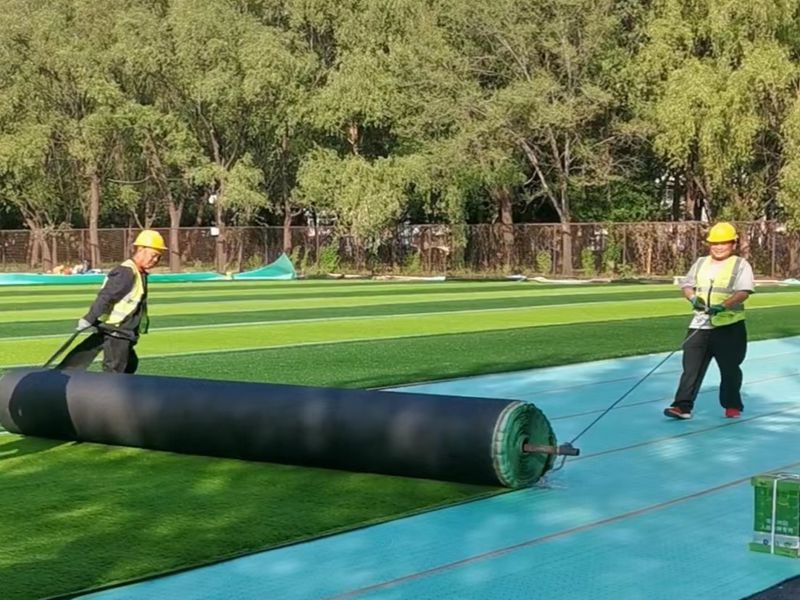
1、 Why is it necessary to lay another layer of shock-absorbing pads on the artificial turf of a football field?
Significantly reduce accidental sports injuries
Buffer pads (shock-absorbing layers) can absorb landing impacts, significantly reducing knee, ankle, and spinal pressure, especially protecting teenagers and high-frequency training populations.
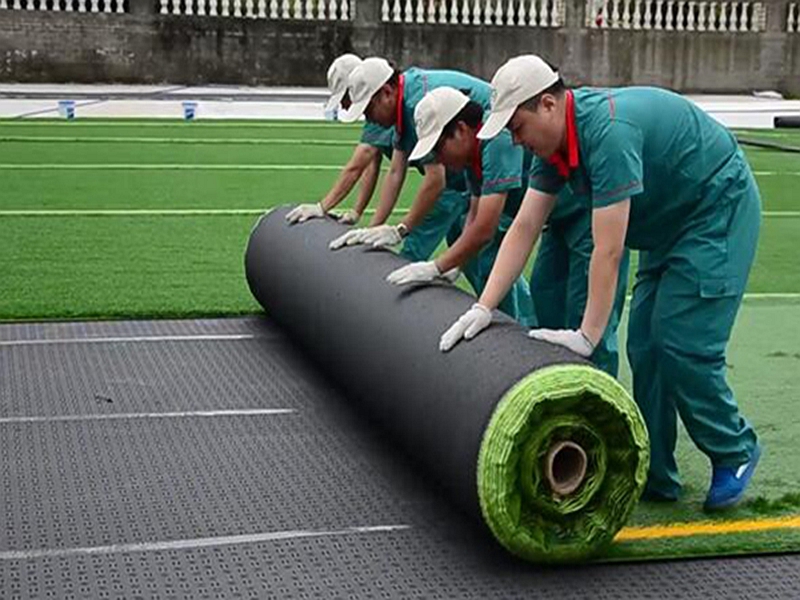
Feet feel closer to natural grass
Avoid excessive rebound and stiff landing caused by hard base, and improve ball control and running comfort.
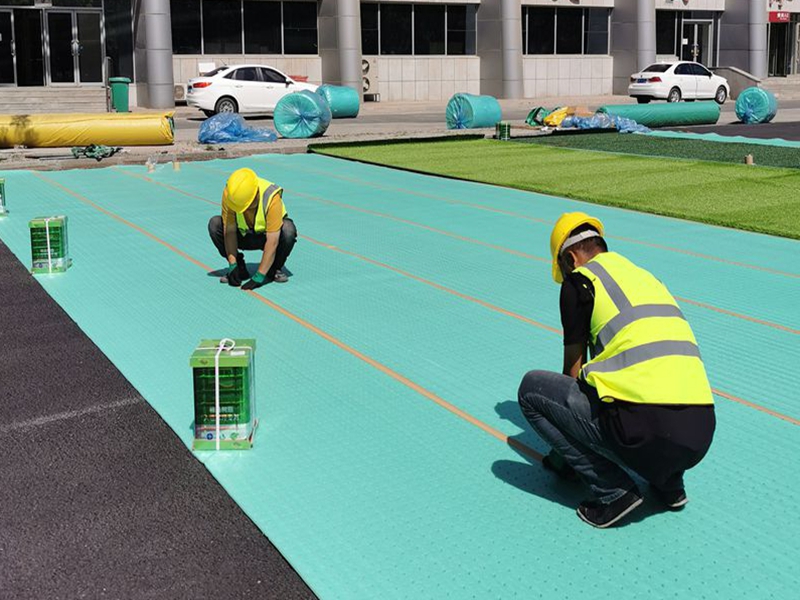
Extend the lifespan of lawns
Disperse the stress on the roots of grass fibers, reduce foundation settlement and local wear, and extend the overall service life.
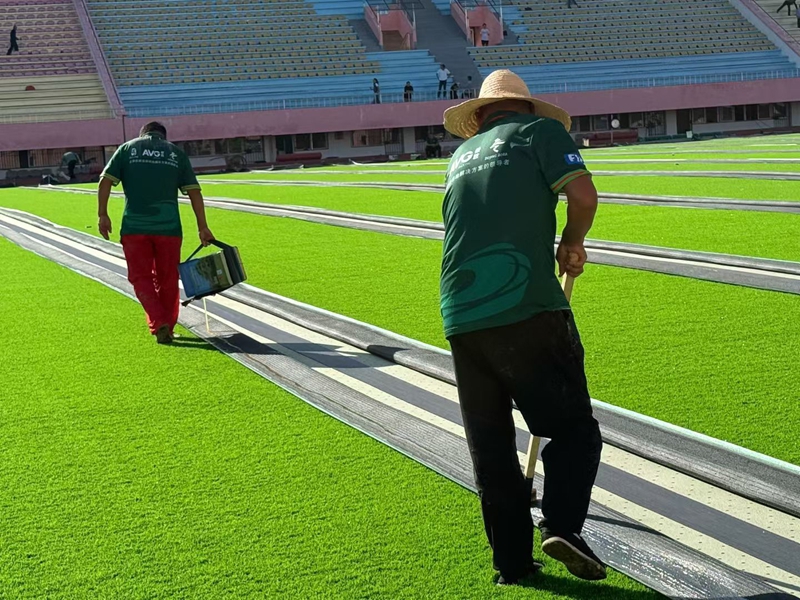
Meet the requirements of the competition/national standards
FIFA、 The national standard GB/T 43566-2023 has mandatory indicators for impact absorption and vertical deformation, and it is almost impossible to meet the standards without padding.
More stable drainage
Combined with the basic slope, the buffer pad can assist in guiding water and reduce the risk of water accumulation.
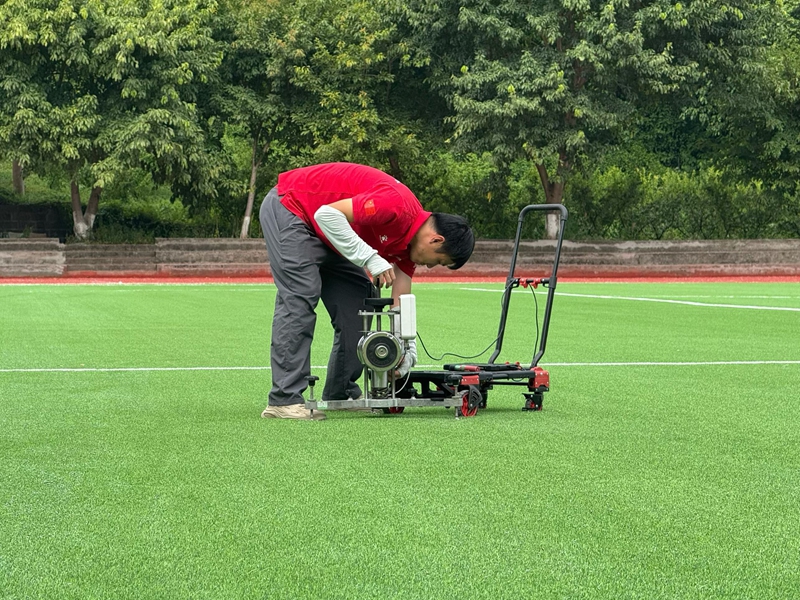
2、 Under what circumstances is it possible not to lay?
Temporary/makeshift venue: with a usage period of less than 1 year, only for leisure and entertainment, without formal training/competition.
Extremely low budget micro site: The foundation is made of gravel and geotextile, and it is only used for extremely low frequency.
There is already a high elasticity filling system: grass fiber+sufficient rubber particles (≥ 8kg/m ²)+quartz sand, which has been tested to meet the impact absorption standard (≥ 45%).
By 2026, standard football fields will be developed: cushioning pads are not an “optional” option, but a “standard” for safety and performance; Due to limited budget, thin budget can be made, but it is strongly not recommended to completely omit it. Unless the frequency of venue usage is not high and the cost calculation is low, there is no need to lay it.