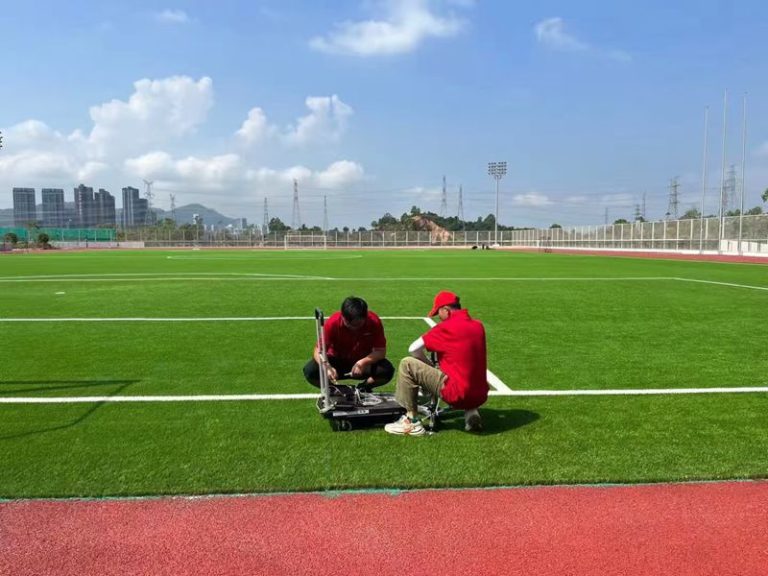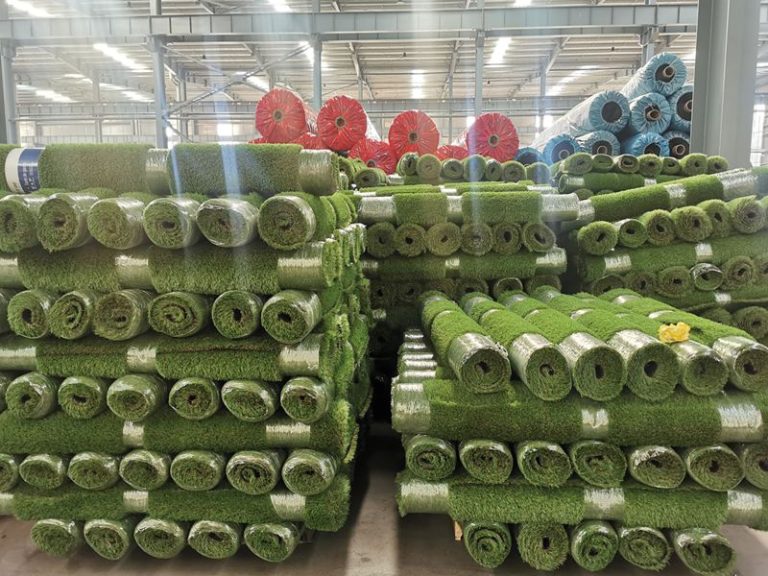
Why does the length of each lawn roll vary when it arrives on site? Is it a production issue?
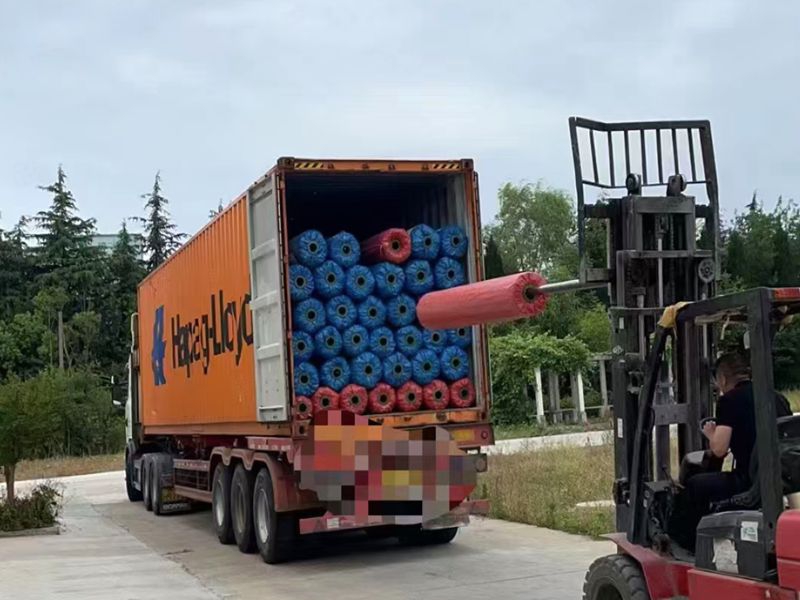
(1) In general, when there are differences in the length of the grass roll, the length of the grass roll will be longer than the actual size. This is because our company can provide free design drawings for you before production, based on the actual size of your site. However, in the production process of artificial grass, we must appropriately increase the length size. The company’s standard is to place a length of 50cm at 72 meters, which can avoid the shrinkage of artificial grass caused by temperature and other reasons, resulting in insufficient length of the grass roll.
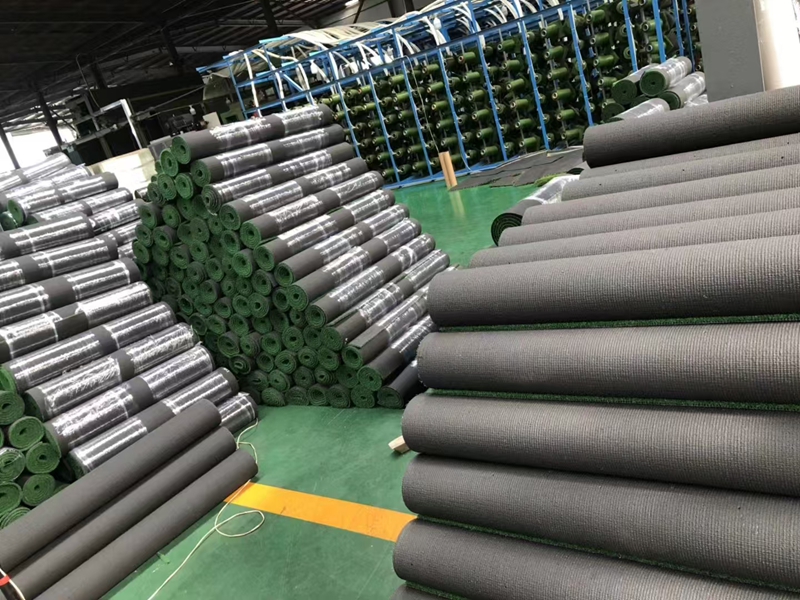
- The factors contributing to the shortage of grass roll length on site include:
A. There is a discrepancy between the on-site dimensions and the dimensions on the drawings, with the on-site dimensions being larger than those on the design drawings;
B. The basic slope error, usually caused by the use of turtle backs or slope drainage on football fields, will result in longer length dimensions than indicated on the drawings;
C. Thermal expansion and contraction, with large temperature differences causing severe shrinkage and shortening of the lawn;
D. Wrinkles and pavement cannot be effectively leveled;
E. The measuring tool must be a steel ruler, as using a tape measure may result in significant deviations;
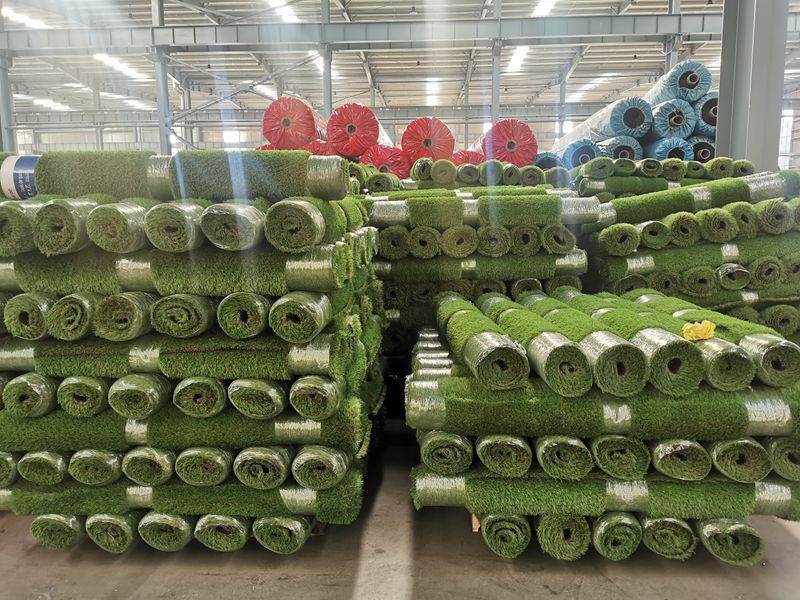
- Why is there a certain difference every time I purchase grass silk, and what is the reason for this?
Answer: Batch differences are also a normal phenomenon. Due to different batches, there may be slight differences in color, but products from the same batch will not exhibit such phenomena, which is not related to the quality of the grass silk.
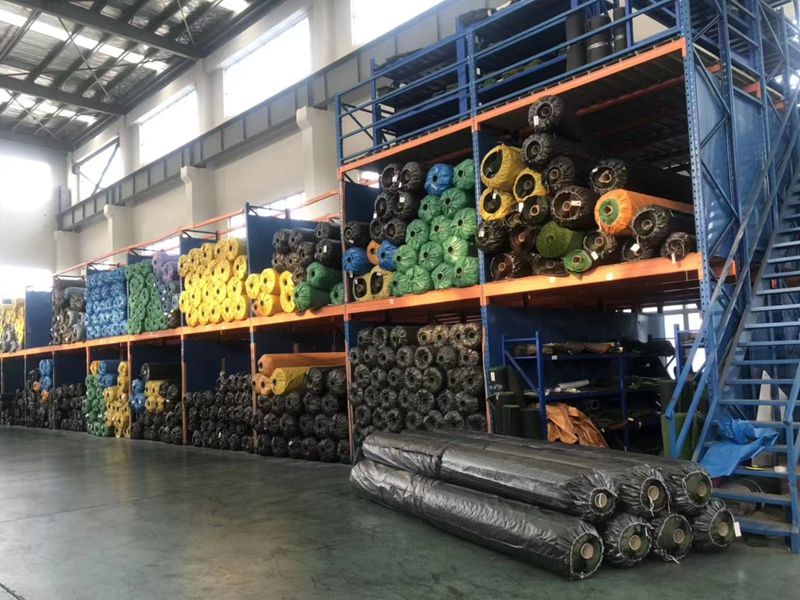
- Why is the loss 50 square meters more than what I ordered from other companies?
Answer: When designing the drawings, we did overlap at the connection between the rolls (the overlap standard is 10M, while other manufacturers may not design overlap, so their calculated losses will be relatively less). The advantage of overlapping is that it can minimize the problem of excessive joints between rolls during on-site construction, but the disadvantage is that the loss will be slightly larger. If you don’t need to do overlap, our company’s losses are the same as other companies.
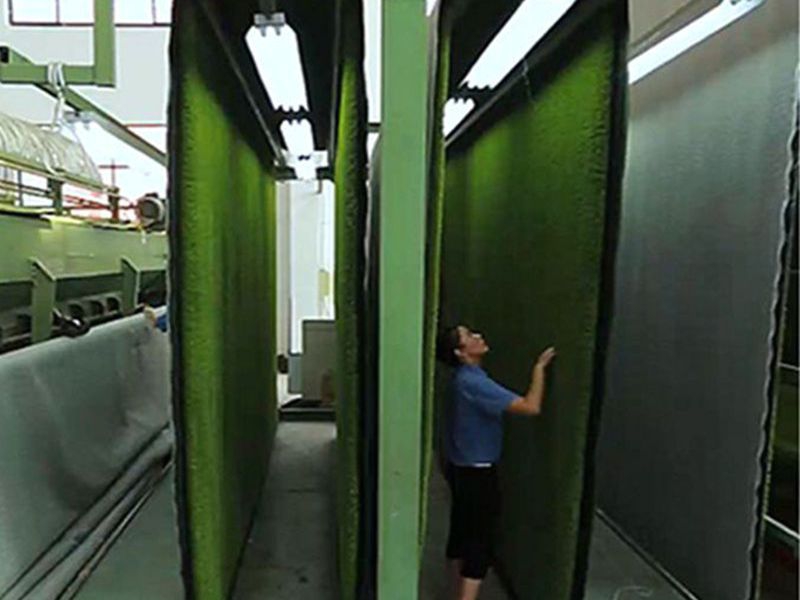
- Why are many grass strands exposed at the bottom? Is it because your company wants to save materials that may affect the quality?
Answer: The main reasons for the issue of grass fibers being exposed outside the base fabric are:
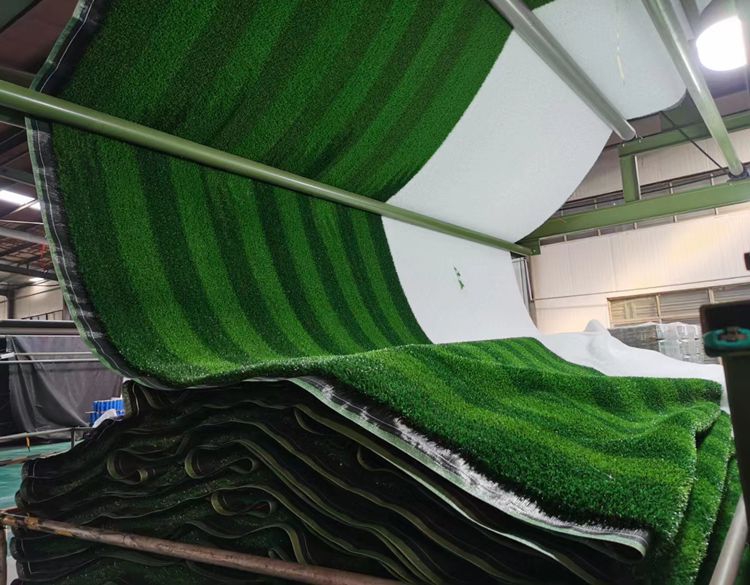
(1) When backing, the glue is applied to the grass fibers and some fibers are exposed, which does not affect the binding force of the glue on the grass fibers, nor does it affect the quality of the artificial grass products. The surface of artificial grass fibers is smooth, and in order to improve the tufting ability, there is also an oily coating layer on the surface of the grass fibers. Therefore, the adhesion between the glue and the surface of the grass fibers is weak. Even if there is adhesive attached to the bottom of some grass fibers that is not exposed, you can gently scrape them off with your hands. It is only a sensory issue and does not affect the actual product quality.
(2) There is no requirement for the appearance of the bottom in the national standards and the relevant standards of FIFA for artificial grass. The requirement for binding force is greater than or equal to 30 Newtons
- Why does the bottom crack when the sample is folded? Is it a quality issue?
Answer: Regarding the issue of bottom cracking, the reasons are:
(1) If you fold the artificial grass product in half, there will be cracking at the seam between the grass thread and the base fabric, which is a normal phenomenon.
(2) The reason for the bottom cracking is that the adhesive used for backing is too thick, which makes it easy to crack after folding. The function of glue is to bind the grass fibers. In order to increase the binding force of the grass fibers, some products may have thicker backing glue. When laying artificial grass, it is laid flat and will not fold in half
- Why is there a significant difference in color between the sample and the lawn on site, and the product is not compatible?
Answer: We strictly follow the quality standards of IS09000 and the product technical parameters agreed upon by both parties in the artificial grass purchase and sales contract for production, and there is no act of cutting corners.
The possible reasons for the phenomenon of incorrect version of grass fiber goods are as follows:
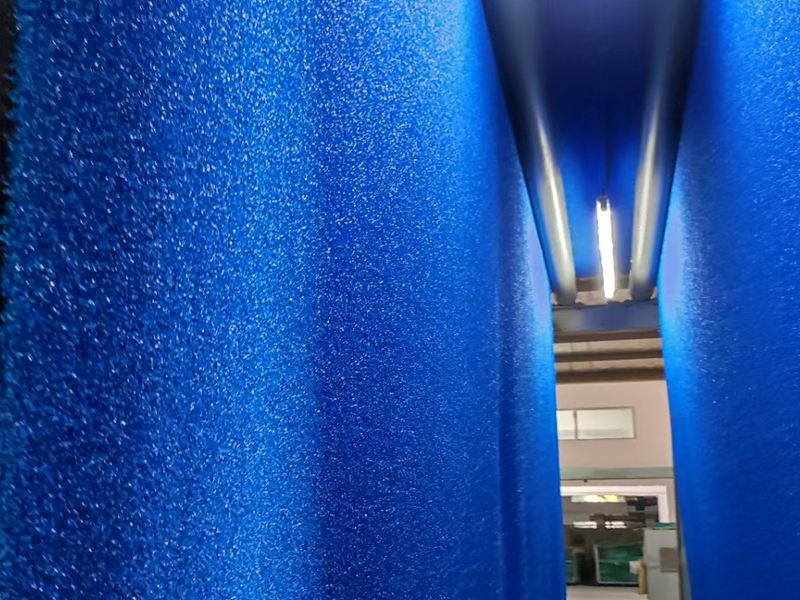
(1) Due to the different production batches of grass fibers, slight differences in the color of grass fibers are normal. Therefore, it is possible for there to be slight color differences between samples and goods. Our company can guarantee that there will be no color differences or other issues with artificial grass products from the same batch.
(2) The sample is placed for a relatively long time, while the finished product is only produced, resulting in a long time difference and causing differences;
(3) The different order of grass fiber lodging can also cause differences; After sorting, it will effectively improve;
- How to store artificial grass for a long time without affecting its quality?
Answer:
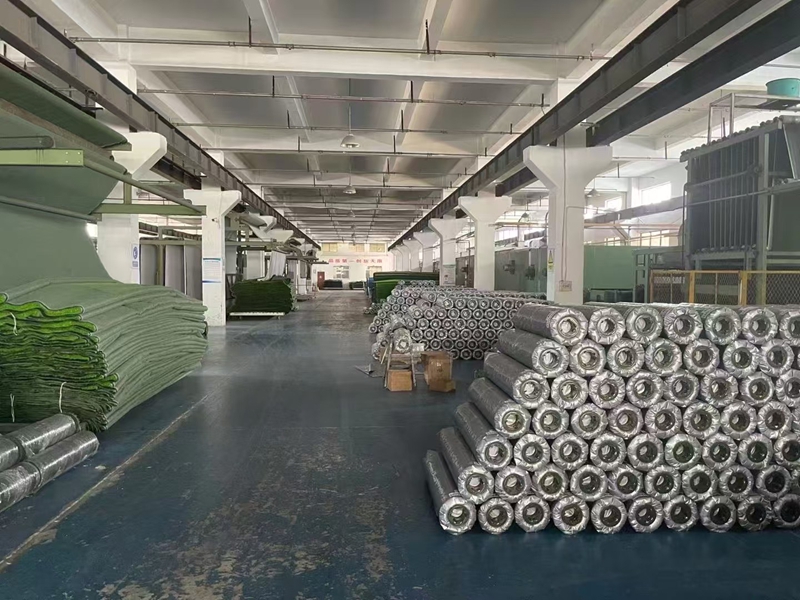
(1) If the artificial grass product has already been transported to the site, it is recommended that you store it indoors. It is best not to stack more than 3 layers at the same time, as it can easily cause the artificial grass to be compressed and deformed over time.
(2) If there are no indoor storage conditions and outdoor storage is needed, it is recommended that you raise the bottom when storing to avoid being soaked in rainwater. If possible, you can cover it with a waterproof cloth.
- Why is the glue purchased for the blueprint design not enough for on-site installation?
Answer: The reasons for insufficient glue are:
(1) When designing the drawings, we calculate based on the estimated quantity based on the construction experience of the engineering department, as there may be some differences between the actual usage on site and the design changes or other objective reasons on site.
(2) During on-site construction, due to the different construction habits of each master, there may be varying degrees of wear and tear, or uneven foundations, which can also result in insufficient glue.
(3) Low weather temperatures, such as below 15 degrees, affect the fluidity of the glue and increase its usage;